Phase-field modeling and simulation of two- and three-dimensional curvature-dependent tissue growth on surfaces
Physica D: Nonlinear Phenomena (JCR Q1 Top 10%), 2026
Authors: Zecheng Qiu, Yutong Wu, Junxiang Yang 
This paper presents a novel numerical framework for modeling curvature-dependent tissue growth on complex scaffolds. The manuscript is currently published at Physica D: Nonlinear Phenomena.
[Free Access] Elsevier provides 50 days of free access to the final version. You can download the full paper for free via this link (valid until September 11, 2026). After the free access period, please kindly use the DOI (ScienceDirect subscription may be required).
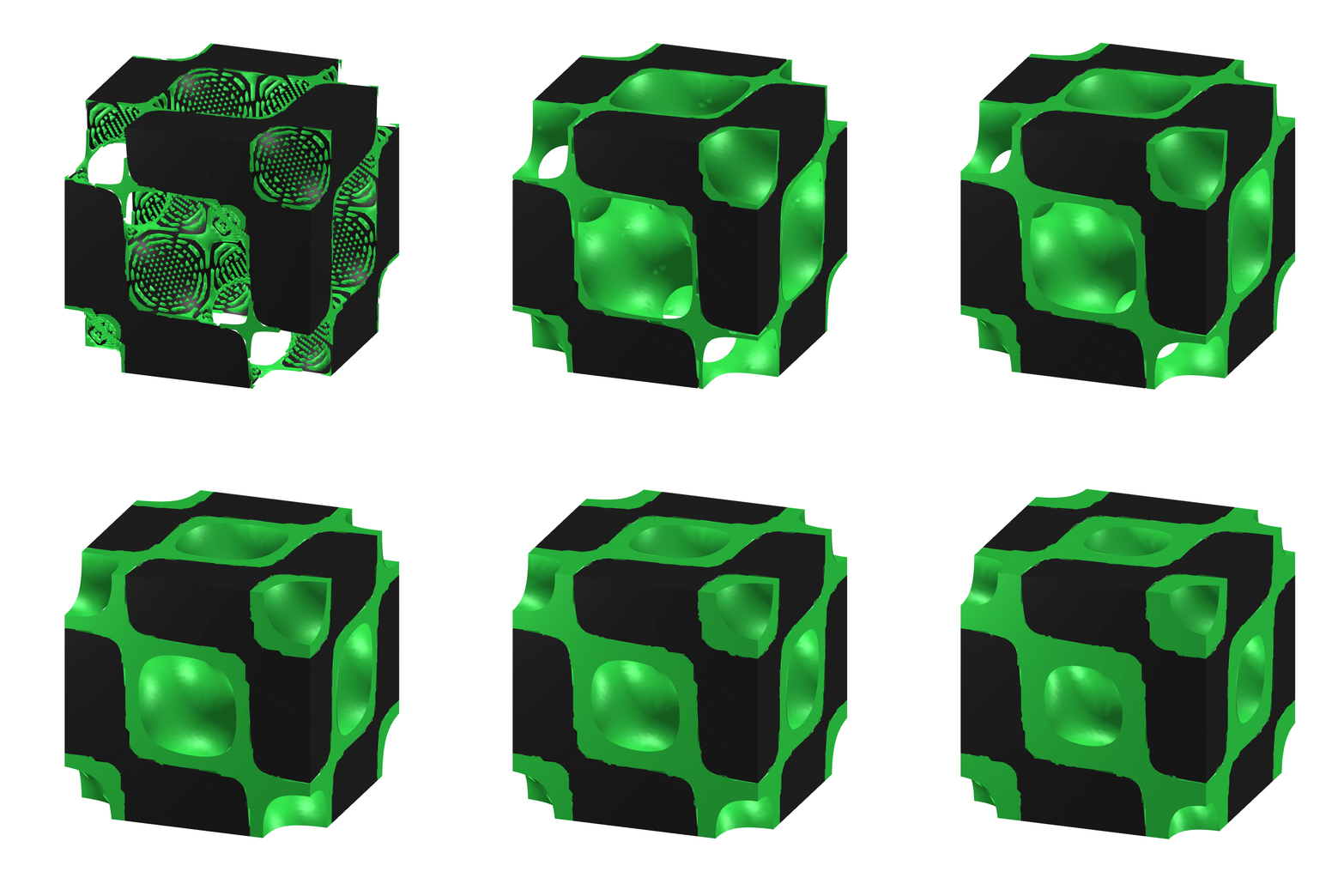
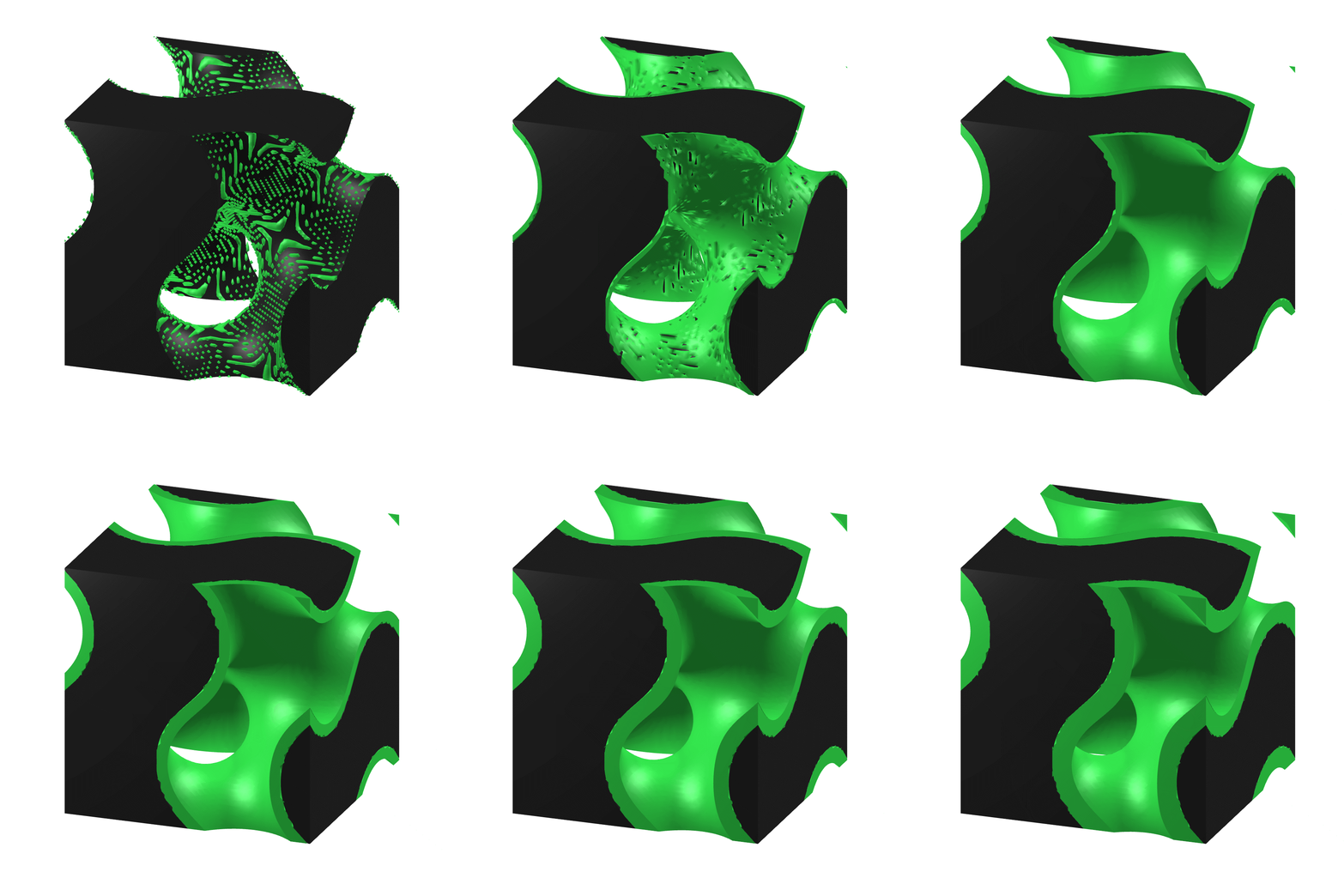
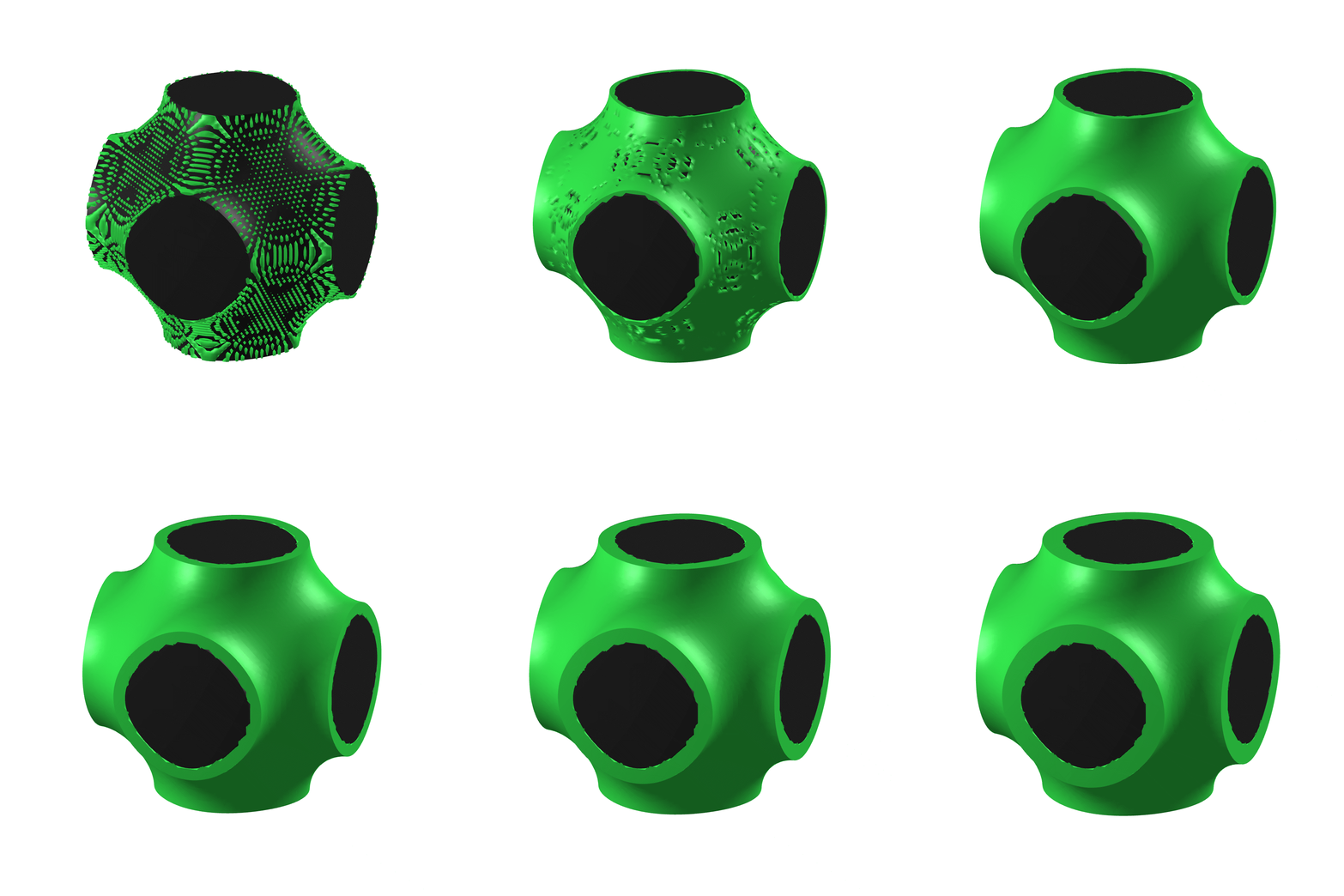
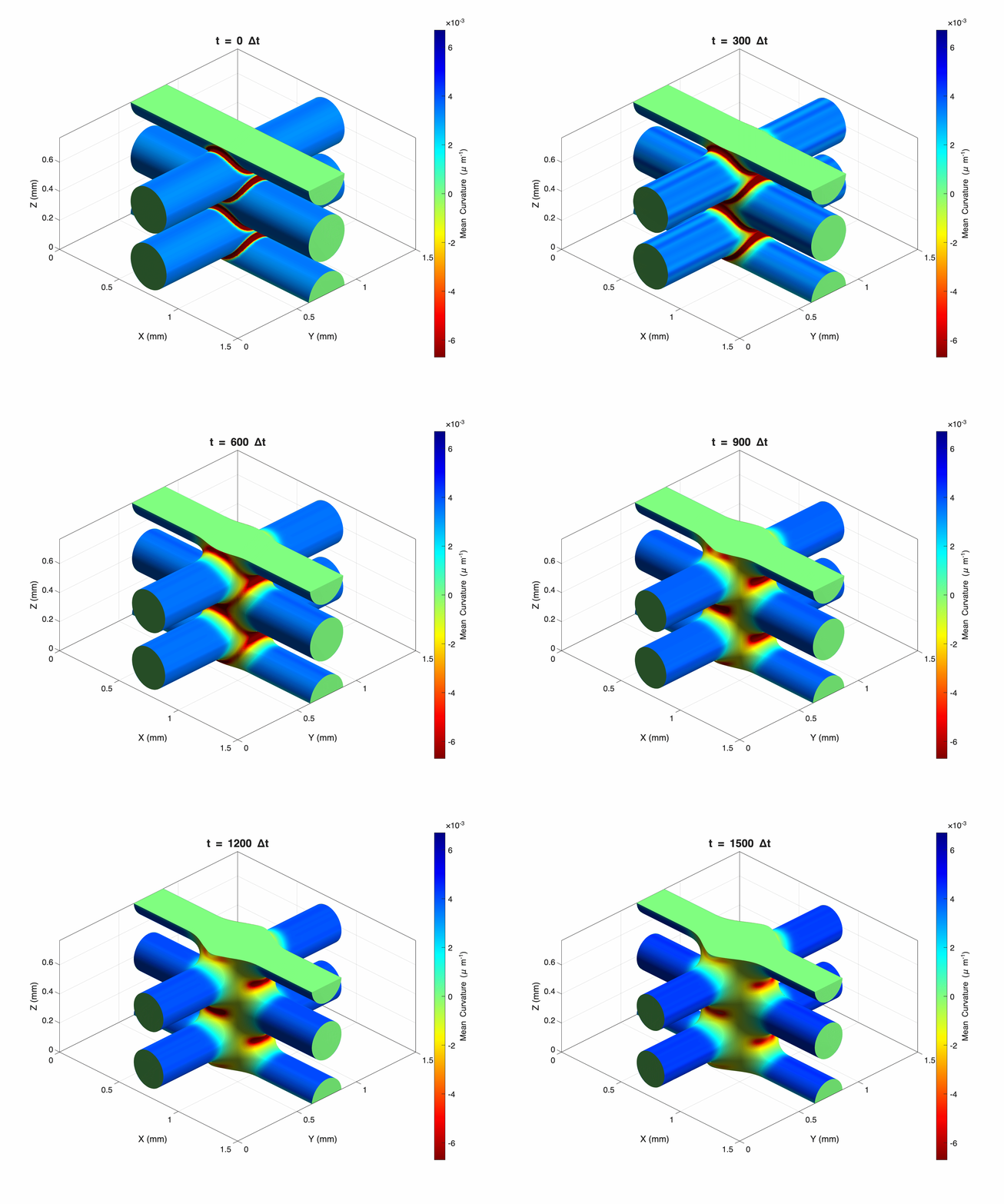
Abstract: Curvature-dependent tissue accretion in porous scaffolds can be modeled by phase-field formulations, but explicit discretizations impose severe stability restrictions, particularly for three-dimensional simulations. We develop a second-order stabilized semi-implicit ADI operator-splitting solver for a curvature-modulated phase-field tissue growth model. The stiff interfacial relaxation operators are advanced by a stabilized ADI update on Cartesian grids, while the nonlinear curvature-dependent growth term is treated by a frozen-coefficient strategy with a pointwise closed-form update. Second-order temporal accuracy is achieved via step-doubling (Richardson extrapolation). Convergence and efficiency are verified by numerical tests, and the method enables robust 3D simulations of tissue infilling in complex scaffold geometries, including TPMS and orthogonal log-pile architectures. The simulation code corresponding to Section 4.1 (Table 1), as well as the 2D visualization of Section 4.2.1 (Figure 2, left) and 4.2.2 (Figure 3, left) in this paper can be accessed at https://github.com/aaron-z-chiu/phase-field-tissue-growth.
Keywords: Phase-field model; Curvature-dependent tissue growth; Stabilized semi-implicit ADI; Operator splitting
Highlights:
- We numerically investigate a phase-field model of curvature-dependent tissue growth on surfaces.
- A semi-implicit operator splitting ADI scheme is developed.
- Richardson extrapolation is used to improve the temporal accuracy.
- The proposed method is decoupled, linear, and stable.
Role & Responsibilities:
- Implemented and open-sourced the complete C++ simulation framework from the ground up, translating the proposed stabilized semi-implicit ADI operator-splitting method into a reliable solver for two- and three-dimensional simulations.
- Designed the software architecture, data structures, and memory-management strategies; conducted numerical experiments and optimized the implementation for efficient large-scale multi-vesicle simulations.
- Led the manuscript preparation and writing, including the technical presentation of the numerical method, experimental design, result analysis and visualization, throughout the publication process.
Recommended BibTeX:
@article{qiu2026,
  title = {Phase-field modeling and simulation of two- and three-dimensional curvature-dependent tissue growth on surfaces},
  journal = {Physica D: Nonlinear Phenomena},
  volume = {497},
  pages = {135345},
  year = {2026},
  issn = {0167-2789},
  doi = {https://doi.org/10.1016/j.physd.2026.135345},
  author = {Zecheng Qiu and Yutong Wu and Junxiang Yang}
}
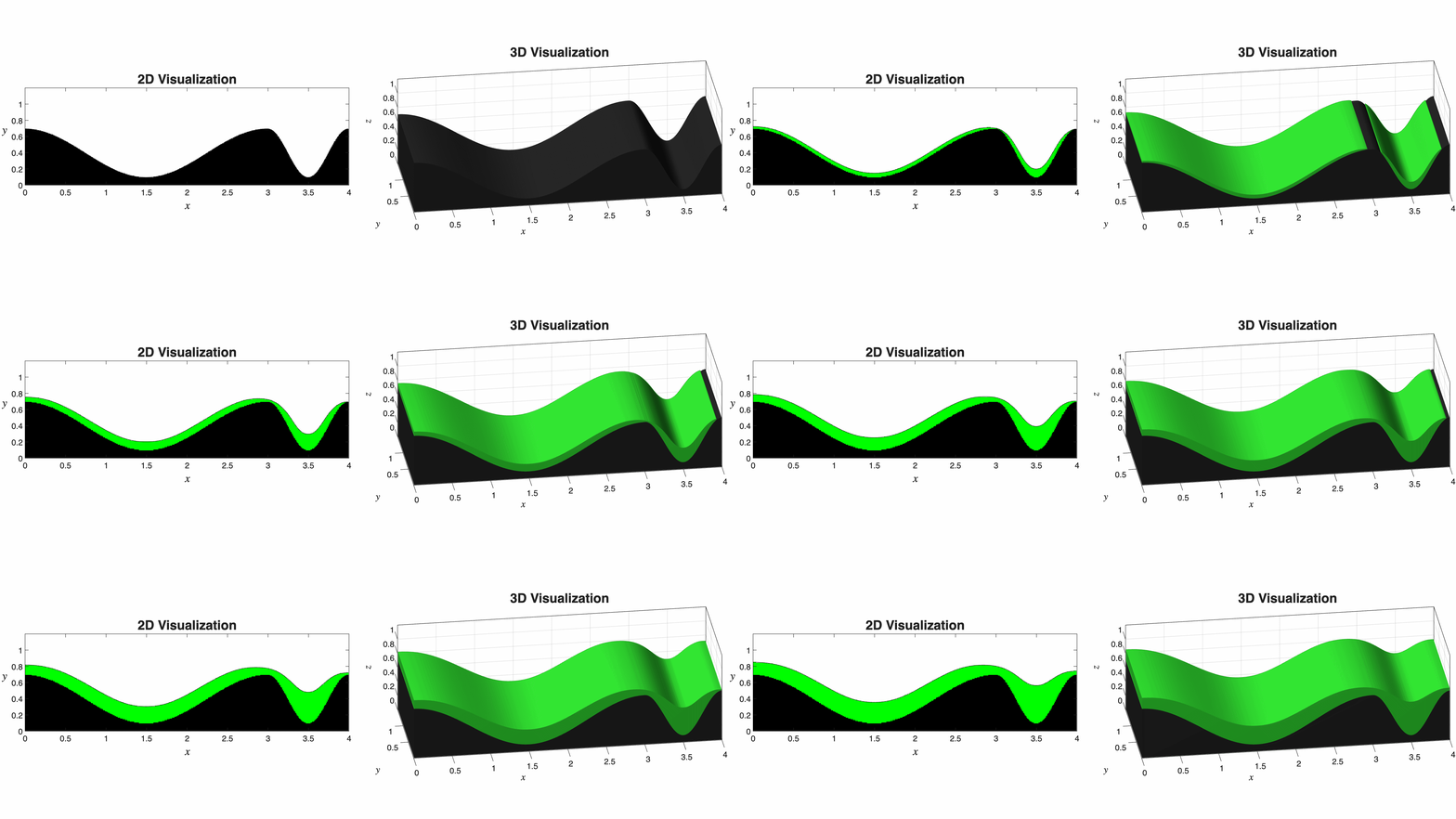 Synchronized evolution of curvature-driven growth mechanism in 2D and 3D perspectives. | |
Three-dimensional tissue infilling process within a Diamond (D) scaffold. | Three-dimensional tissue infilling process within a Gyroid (G) scaffold. |
Three-dimensional tissue infilling process within a Primitive (P) scaffold. | Evolution of mean curvature heatmap during tissue growth in an orthogonal log-pile scaffold. |